








We provide specialized winterization services to safeguard your pool during the off-season, and when spring arrives, we handle the thorough opening process.

img

Shape
Shape
Image
(Id No.: ACD-7371)

VIVECHNA CONSULTING LLP

img
img
Icon

Clients from all
over India.

Icon

Nationwide Service

Icon

Specialize in Coal
Supply Consultancy

Icon

Various Sectors

Services we offer

Icon

Commercial Contracts

- Formulation
- Implementation
- Dispute Settlement

Read More
Icon

Coal Consultancy

- Policy & Regulation
- Procurement
- Quality & Logistics

Read More
Icon

Legal Representation & Advisory

- Documentation
- Corporate Affairs
- Disciplinary Cases
- Arbitration & Mediation

Read More
Icon

Liaison

- Licensing & Govt. Approvals
- Accrediation from agencies
- Institutional Financing

Read More
image
image
Image
About Us

Our philosophy is
न्यायम् पारायणम् विजयम्
(Righteousness Wins)

The inception of Vivechna Consulting LLP stems from an identified gap in availability of specialized consultancy services towards navigating the intricacies of contract law and the practical realities of commercial transactions, particularly involving the government sector as one of the parties.
We specialize in empowering businesses to confidently engage in contractual agreements by offering expert services such as:

  • Document Preparation: Crafting precise, robust, and legally sound contracts tailored to your specific commercial objectives.
  • Contract Vetting: Meticulously reviewing existing or proposed agreements to identify potential risks, ensure compliance, and optimize terms in your favour.
  • Commercial Dispute Resolution: Providing strategic and effective litigation support when commercial disagreements arise, safeguarding your interests and seeking favourable outcomes.
  • Very Specialised consultancy in coal segment With extensive knowledge of the coal industry's regulatory landscape and operational intricacies, we provide specialized consultancy across the coal sector, covering policy and regulatory matters, procurement strategies, quality and logistics management to support businesses throughout the coal supply chain

The above requires a unique blend of legal acumen and commercial foresight. Founded by partners with extensive experience in both the legal and commercial landscapes, our firm is dedicated to providing a seamless, one-point solution for all your business needs in this backdrop. Unparalleled expertise and a comprehensive approach to contract management and commercial dispute resolution sets us apart. Our team consists of highly experienced and skilled professionals/legal experts who are dedicated to delivering exceptional results and ensuring total satisfaction for our clients. One of our very specialised consultancy segments is Coal. More details on it are given in our Coal Vertical

Schedule Consultation

Schedule A Consultation

Our team of seasoned Experts is dedicated to carefully listening to your concerns, ensuring a deep understanding of your unique situation.

01 image

Schedule A Time

Choose a convenient date and time that works best for you. Our experienced lawyers are available to discuss.

02 image

Meet For Consultation

During your consultation, you'll have the opportunity to discuss your case with a qualified attorney.

03 image

Plan for Success

Based on the information gathered during your consultation, we'll develop a tailored legal strategy to help you.

Our Experts

Meet Our Experienced Panel of Experts

Team

Dr. Anurag Garg

Founder Partner

B.E, M.B.A., LL.M, Ph.D. Executive Director (Marketing & Logistics), Coal India Limited (Retd.)

Team

Shri R Kartik

Partner

Liaison & Marketing Expert

Team

Shri Sunil Kumar Roy

Branch Head, Bilaspur Branch

General Manager (Marketing & Sales) Northern Coalfields Limited (Retd.)

Team

Shri Subhash Chandra Mistry

Resident Zonal Executive, Sambalpur Branch

Ex. PS to CMD, Mahanadi Coalfields Limited

Team

Shri P. F. Jambhulkar

Business Associate, Nagpur Branch

Ex. PS to Director (Marketing), Coal India Limited

Team

Shri Snehil Tamboli

Business Development & Administration,

Executive Bilaspur

Frequently Asked Questions

Have Any Questions?

Yes, Vivechna Consulting LLP offers its legal services across multiple cities and states in India. Our firm is well-equipped to manage matters in different cities and states through a robust network of legal professionals and associates. We ensure seamless coordination and consistent quality of service, regardless of the location of the matter.

Our fee structure is determined on a case-to-case basis, depending on the nature, complexity, and scope of the matter. A detailed consultation is conducted to understand the specific requirements of the client, following which an appropriate and transparent fee quote is provided.

Our initial consultation is 30-minute meeting where we can discuss your legal needs and determine if we are the right fit for your case. You can schedule a consultation.

News & Blog

Our News & Update

blog image

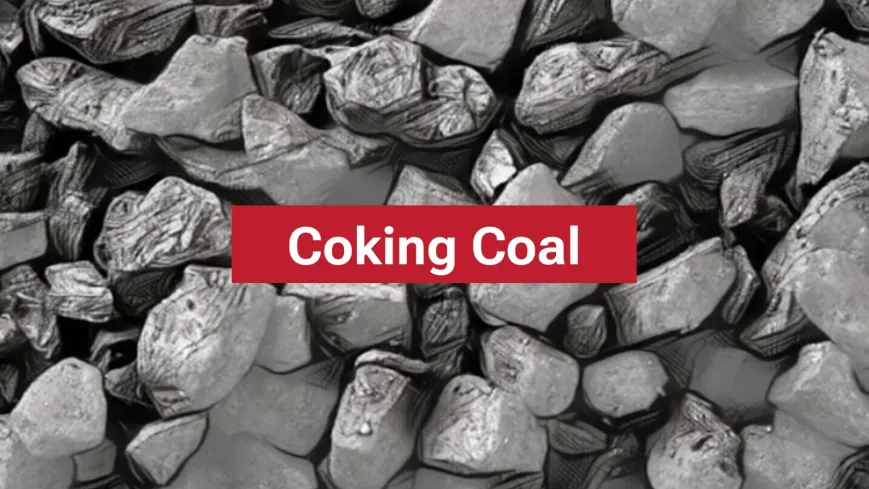
India Declares Coking Coal a "Critical & Strategic Mineral" – What Changes Now?

Executive Summary: The Ministry of Coal has officially amended the mining laws to classify Coking Coal as a "Critical and Strategic Mineral." This move, notified via Gazette Notification on January 28, 2026, signals the government's intent to secure raw materials for the steel industry and reduce India's heavy reliance on imports.Deep Dive: Analysis1. The News (What actually happened?) On January 27, 2026, the Ministry of Coal issued a new notification - (G.S.R. 64(E)), using their powers under Section 11C of the MMDR Act, 1957 to change the "First Schedule" of the Act.2. The Two Key Changes The government made two specific text changes to the law: Change 1 (The Definition): In "Part A" of the list, changed the word "Coal" to "Coal, including Coking Coal". This ensures there is absolutely no confusion in the law—Coking Coal is distinct but included under the coal umbrella. Change 2 (The Strategy Shift): This is the big one. Inserted a new entry, "3A. Coking Coal," into Part D of the Schedule. Why does "Part D" matter? In the world of Indian mining law, Part D can be visualized as the VIP list. It is the list of Critical and Strategic Minerals. By moving Coking Coal here, the government is officially saying, "This mineral is too important for national security and the economy and not to be treated like just ordinary fuel." Key Insights & Industry Impact1. Why did Government do this? (The Import Problem) India is huge in steel production, but we don't have enough Coking Coal (the specific type of coal needed to produce steel in blast furnace from iron ore). We import a massive amount of it. By classifying it as "Critical & Strategic," the Central Government takes tighter control to ensure domestic reserves are mined faster and more efficiently.2. Central Government vs. State Government Usually, minerals in Part D fall under closer Central Government scrutiny regarding mining leases and auction terms. This could streamline the auction process, bypassing some local bureaucratic hurdles that often delay regular coal blocks.3. Boost for the Steel Sector This policy seems directly aimed at the "National Steel Policy." The government likely plans to auction Coking Coal blocks specifically to steel companies (captive use) or commercial miners who promise to sell to domestic steel plants, reducing our import bill. Actionable Advice (What you should do) For Steel Manufacturers: Monitor the "Nominated Authority" website immediately. Since this is now a Strategic Mineral, expect a special round of auctions specifically for Coking Coal blocks to be announced soon. For Mining Contractors: The government will likely push for "high-tech mining" in these blocks because Indian Coking Coal is difficult to wash and process. If you have technology for Coking Coal Washeries, your services will be in high demand. Legal & Compliance Teams: Update your internal definitions. If you are applying for a tender that mentions "Part D Minerals," understand that Coking Coal is now part of that compliance bracket.

Read More
blog image

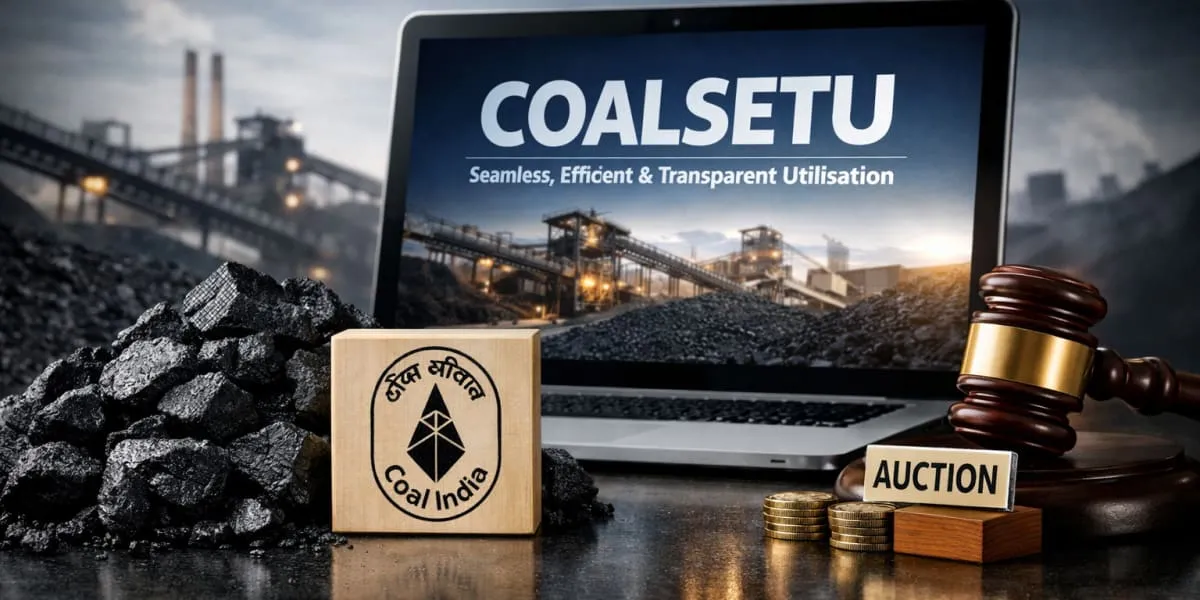
Draft Guidelines Released for CIL's New 'CoalSETU' Auction Window

Executive Summary: On February 16, 2026, Coal India Limited (CIL) released the draft operative modalities for a new auction window named 'CoalSETU' (Seamless, Efficient & Transparent Utilisation). This window will be under the Non-Regulated Sector (NRS) Linkage Auction Policy. The draft document outlines the proposed rules for domestic buyers except traders, seeking long-term coal supply agreements. CIL is currently inviting feedback from prospective bidders on these proposed modalities.Deep Dive: Analysis1. Who Can Participate? The draft indicates that any domestic buyer requiring coal can participate in this auction. This includes existing specified end-users, such as cement and sponge iron plants, as well as independent coal washery operators. However, the document explicitly restricts participation to actual users and washeries; traders are not permitted to participate in this window.2. Usage and Export Rules: The proposed modalities introduce specific parameters for how the allocated coal can be utilized. Buyers may use the coal for their own industrial consumption, coal washing, or for export. The draft specifies that linkage holders are eligible to export up to 50% of their total coal linkage quantity.3. Long-Term Contracts: For those who successfully secure allocations, the proposed tenure for the Fuel Supply Agreements (FSAs) under the CoalSETU window is 10 years. Key Insights: Restrictions and Pricing Mechanism1. Resale and Rejects Guidelines: While the draft permits the export of raw coal up to the 50% limit, it prohibits the resale of raw coal within the domestic Indian market. Businesses are, however, permitted to sell processed products, such as washed coal and washery by-products, domestically.Additionally, the disposal of coal washery rejects with a Gross Calorific Value (GCV) of less than 2200 kcal/kg must follow the specific Ministry of Coal policy dated May 27, 2021. The draft also requires a declaration confirming that no coking coal is processed or utilized under this specific linkage window.2. The Proposed Auction Format The document outlines a 'First-Price Sealed Bid' auction methodology. In this format, eligible bidders submit a single sealed bid specifying the quantity requested and the price per tonne. The winning premium percentage established during the auction will remain constant throughout the 10-year tenure of the FSA. The final delivered price will be calculated using the modulated notified price, the winning premium, and an "Escalable Component" based on previous auction premiums. Actionable Advice (What businesses should consider) Submit Feedback: CIL has opened a 20-day window from the date of the notification (February 16, 2026) for interested parties to submit opinions or suggestions regarding these draft modalities. Businesses may want to review the pricing formulas and usage restrictions to determine if feedback is necessary. Review Bidding Strategies: Because the proposed mechanism is a sealed bid rather than a forward auction, companies might need to evaluate their internal bidding strategies. In this proposed format, the submitted bid price is final and will be ranked in descending order to determine allocations. Analyse Washery Capabilities: Independent washery operators should ensure their Environmental Clearances (EC) and Consents to Operate (CTO) explicitly specify "coal washing / beneficiation" to meet the proposed qualification criteria.

Read More
blog image

Official Update: Ministry of Coal Amends Approval Rules for Opening Coal Mines

Executive Summary: In exercise of powers conferred by sub-sections (1) and (2) of section 18 of the Mines and Minerals (Development and Regulation) Act, 1957 (67 of 1957), Ministry of Coal On December 23, 2025, published the Colliery Control (Amendment) Rules, 2025 in the official Gazette. This amendment modifies Rule 9 of the principal 2004 rules, changing the prior approval process required to open a coal mine, a seam, or a section of a seam. The updated framework establishes different approval authorities depending on whether the colliery owner is a registered company or not.Deep Dive: Analysis1. The Primary Change for Registered Companies: Under the amended rule, owners of collieries that are registered companies must obtain prior approval from the Board of the company instead of CCO before opening a coal mine, a seam, or a section of a seam.2. The Board's Responsibility and Notification: The Board of the company is tasked with ensuring all requisite permissions prescribed by the Central Government, the State Government, and statutory bodies are obtained before granting its approval. After opening the mine or seam, an intimation must be sent to the Coal Controller Organisation within a period of fifteen days. The Coal Controller Organisation may prescribe a specific form for this purpose.3. Rules for Non-Companies: For colliery owners that are not registered as companies under the Companies Act, 2013, the process is different. These entities cannot open a coal mine, seam, or section without the direct prior approval of the Coal Controller Organisation.4. Recommencing Discontinued Operations: The notification outlines that these approval requirements also apply to the recommencement of mining operations. If operations in a mine, seam, or section have been discontinued for a period of one hundred and eighty days or more, the owner must go through the approval process again before restarting.Key Insights: Compliance and Tracking1. Shift in the Initial Approval Step: For registered companies, the amendment shifts the initial formal approval step for opening a mine or seam to the corporate board level, provided all external statutory permissions are already met.2. The 15-Day Window: Registered companies have a strict fifteen-day window after opening the mine, seam, or section to notify the Coal Controller Organisation.3. Indicative List of Permissions: To assist with compliance, the Coal Controller Organisation will maintain an indicative list of the permissions required from the Central Government, the State Government, and statutory bodies for these purposes.Actionable Advice (What businesses should consider)●        Update Internal Protocols: Corporate colliery owners should consider updating their internal governance protocols to ensure that the Board formally reviews and approves all mine, seam, or section openings prior to commencement.●        Track Discontinued Operations: Mining companies should track any paused operations closely. If a stoppage reaches or exceeds 180 days, businesses should prepare to repeat the formal approval process before restarting work. ●        Prepare for Compliance Reporting: Businesses should monitor the Coal Controller Organisation's portal to access the indicative list of required permissions and to obtain the prescribed form for the 15-day intimation process.

Read More
blog image

Ministry of Coal Releases 2026 Guidelines for Underground Coal Gasification (UCG)

Executive Summary:On April 6, 2026, the Ministry of Coal released a new set of guidelines for preparing and approving mining plans specifically for Underground Coal Gasification (UCG). These guidelines are effective immediately and apply to all coal and lignite blocks proposed for UCG. The framework covers everything from the initial technical studies and safety standards to the financial requirements for mine closure. This update establishes a formal protocol for converting coal into synthetic gas (syngas) while the coal is still in the ground. Analysis:1. Mandatory Technical FoundationsThe guidelines require that every UCG mining plan be built on three foundational reports: Geological Report (GR): This must be prepared according to established norms and include 3D seismic survey data. Any commercial minerals other than coal found during exploration must be reported to the State and Central governments. Hydrogeological Study: This includes a three-dimensional model of the subsurface environment to track potential groundwater movement and contamination for at least 10 years after operations end. Pilot Study: Before full-scale operations, a study must be conducted by expert institutions to evaluate technical feasibility and environmental safety. 2. Safety and Infrastructure StandardsThe guidelines set specific physical and technical boundaries to manage risks: Depth and Distance: The targeted coal seam should ideally be deeper than 250 meters and safely distanced from drinking water sources and perennial rivers. Barriers: In mines that use both UCG and traditional methods (mixed mines), a horizontal barrier of at least 500 meters must be maintained between the UCG project and other mining boundaries. Monitoring: The protocol requires real-time pressure and temperature monitoring for the leak-proof syngas pipelines. Surface monitoring points must also be established to track any land movement or subsidence. 3. Mine Closure and Financial Obligations Every project must include a Mine Closure Plan, which is divided into "Progressive" (ongoing) and "Final" stages. Escrow Account: Before starting commercial work, the project proponent must open a tripartite escrow account with the Coal Controller Organisation (CCO). Funding Rates: The annual deposit rate is set at a base of ₹2,00,000 per hectare. This rate is linked to the Wholesale Price Index (WPI) as of December 2025 and will be adjusted annually. Penalties: Late deposits attract an interest rate of 1% per month. If a deposit is not made by September 30 of the following year, the Coal Controller can suspend the entire mining plan.  Key Insights: The Approval Process1. Digital Submission All applications must be submitted through the Single Window Clearance System (SWCS) of the Ministry of Coal. A non-refundable application fee of ₹1,00,000 is required for each plan.2. Technical Committee Review The Coal Controller is assisted by a Technical Committee with members from various departments, including the Ministry of Environment, the Directorate General of Mines Safety (DGMS), and the Central Ground Water Board (CGWB). Timelines: Committee members have 15 days to provide comments. Revisions: If the committee suggests changes, the company has up to 45 days to submit a modified plan to avoid potential rejection. 3. Modifications and Revisions Minor changes to a plan can be approved by the company's own Board, but these must be communicated to the CCO within 30 days. Major revisions require prior approval from the CCO. Actionable Advice (What businesses should consider) Audit Existing Blocks: Companies with coal blocks should review their geological data to see if any seams meet the UCG depth and stability criteria (preferably >250m depth). Prepare for Pilot Studies: Since a pilot study is a mandatory prerequisite for a commercial mining plan, businesses should begin identifying expert institutions to conduct these evaluations. Budget for Escrow: Financial planning should account for the ₹2,00,000 per hectare base rate for the escrow account, including the annual 5% compounding requirement and WPI escalations. Engage Qualified Experts: The guidelines specify that mining plans must be prepared by a "Qualified Person" or an accredited "Mining Plan Preparing Agency".

Read More
blog image

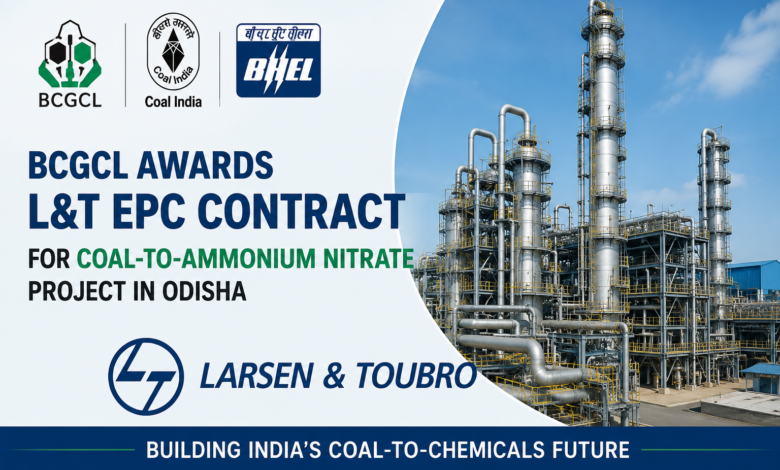
BCGCL and MCL Sign Agreement for Coal to Ammonium Nitrate Project

On April 1, 2026, a land leasing agreement was signed between Bharat Coal Gasification and Chemicals Limited (BCGCL) and Mahanadi Coalfields Limited (MCL). This agreement is for establishment of a Coal to Ammonium Nitrate project located at Lakhanpur, Odisha. The project is designed to produce 2,000 Tonnes Per Day (TPD) of Ammonium Nitrate and involves an financial support by MoC of approximately 1350 crore. This initiative uses technology developed in India by Bharat Heavy Electricals Limited (BHEL). Project Details and Technology1. This project is the first coal gasification facility in India to use technology developed by BHEL. The use of this indigenous technology is intended to reduce the requirement for imported technical solutions in the energy and chemical sectors. 2. The project will be located on approximately 350 acres of land currently held by MCL. Recent policy changes by the Ministry of Coal allow for the use of Coal Bearing Area (CBA) land for coal gasification projects. These reforms enable the use of existing coal-bearing land for gasification purposes. 3. Financial Support and Incentives:Financial assistance by the Government for Coal Gasification projects: The Cabinet has approved ₹8,500 crore to promote coal gasification across the country. The Ministry of Coal is providing ₹1,350 crore in financial support for this specific Lakhanpur project through its incentive scheme.  Project Status and Implementation1. The project is moving forward with the awarding of Lump Sum Turnkey (LSTK) packages: BHEL: LSTK-1 and LSTK-2 packages is awarded. 2. Work has started on the ground in several areas: Boundary wall construction and tree enumeration are currently in progress. The official website of BCGCL has been launched to provide project updates and information on tenders. 3. The project is described as an effort to increase the value of domestic coal resources. According to the Ministry, coal gasification has the potential to reduce the amount of foreign exchange used for imports by increasing domestic production capabilities.  Actionable Advice (What businesses should consider): Stakeholders interested in upcoming tenders should use the newly launched BCGCL website as a central hub for information. Businesses in the coal sector should review the specific updates to the Coal Bearing Area (CBA) land use rules to understand how these reforms might apply to other gasification projects. With site development already underway and major contracts awarded, suppliers and service providers should track the progress of LSTK packages for potential sub-contracting opportunities.

Read More